
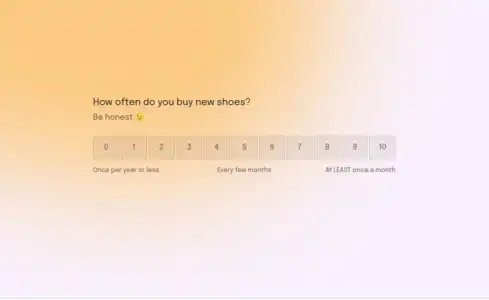





Market Research Survey Template
Market research survey names a category, not an instrument. Under that label live satisfaction studies, concept tests, segmentation waves, pricing probes, brand trackers — dozens of forms that look alike and answer different questions. What separates a study from a questionnaire is never the form itself; it is the sequence of decisions made before a single question is written: what the research must decide, who must answer, how many of them, and what happens to the data when it arrives. Get that sequence right and almost any competent instrument produces insight. Skip it and the best-designed survey in the world yields a pile of interesting numbers pointed at nothing.
This market research survey template is the general-purpose instrument for the study that does not fit a specialist mold — plus the method around it, stage by stage.
The Hypothesis Before the Questions
Every study begins with a sentence, written before the form exists: we believe X, and if this survey shows Y, we will do Z.
The sentence is a filter with teeth. A study that cannot complete it — no believable action attached to any plausible result — should not be fielded, however interesting it sounds. In practice this discipline kills roughly a third of planned surveys, which is exactly its value: each one was going to cost fielding effort and attention and return numbers nobody would act on. One primary question per study, two or three secondary at most. Studies with five primary questions are five studies wearing one form, and they finish like none of them.
Sizing the Sample
The sample size decision should be arithmetic, not vibes — the sample size calculator does the math in a minute. Two intuitions it encodes:
- The population barely matters. Whether your market is four thousand or four million, the sample needed for a stable read hovers in the hundreds, not the thousands — precision improves with the square root of sample size, which is why the last few hundred responses cost the most.
- Segments multiply everything. A sample sized for the total audience is not sized for the cross-tabs you actually want. If the decision hinges on the difference between two segments, each segment needs its own minimum — meaning the total sample is the segment minimum times the number of segments that matter, planned for accordingly.
The Question Budget
Every question on the form spends from a fixed account: respondent attention. The budget discipline:
- One thought per question. Asking about pricing and support in one line produces an answer to neither. Split it or lose it.
- Closed first, open rarely. Structured questions — multiple choice, rating, opinion scales — carry the quantitative load and analyze themselves; open long text questions are spent deliberately, one or two, on the things only respondents can say.
- The right scale for the job. A standard NPS question for recommendation benchmarks, rating rows for attribute batteries, scales where intensity matters. Mixing scale directions and lengths within a form adds cognitive load that shows up as straight-lining later.
- Stimulus, shown properly. Concept and creative questions live on picture choice, where the image is the question and the tap is the answer.
Aim for a completion window under five minutes and show it honestly with a progress bar. The abandonment curve is unforgiving past that mark, and a partial response is a smaller sample wearing a completed one’s clothes.
Fielding for Rate and Representativeness
Distribution is where studies are quietly won or biased:
- Meet the audience where they are. Email lists, social channels, WhatsApp shares, embedded site placements — the channel mix should reflect where the population actually spends attention, and a shareable link travels across all of them unchanged.
- Track the source of every response. Tag each channel’s link with the UTM builder and pass the parameters through hidden fields — channel bias is real, and you can only correct for what you recorded.
- Predict before you promise. The response rate calculator converts your audience size and channel history into an expected completion count — field the study knowing whether you are chasing a few hundred responses or a few thousand, and schedule reminders accordingly.
- Close the sample, not just the form. When the target count is reached, close the form rather than letting the sample drift — late stragglers are not free data, they are a different population arriving after the one you sized for.
Data You Can Actually Analyze
The last mile decides whether the study was worth the fielding. Preview the form as a respondent before launch and hunt the ambiguities that poison data silently: a question two people will read differently is two questions. On completion, the response view exports cleanly into whatever analysis stack the team runs — and the analysis rule is always the one the hypothesis wrote at the start: cut the data where the decision lives, not everywhere the form allows.
When the study ends, duplicate the form for the next wave rather than rebuilding — identical instruments, wave over wave, are what turn one-off studies into trendable research.
For the specialist instruments that grow out of general studies — concept tests, pricing research, audience segmentation — the market research sub-category collects the family, the conduct research category maps the whole territory, and the market research use case shows how the pieces sequence into an ongoing program.
Frequently Asked Questions
How long should a market research survey be?
Short enough to finish in under five minutes for general audiences — roughly ten to fifteen well-built questions. Expert or high-stakes audiences will tolerate more, but the abandonment math applies to everyone eventually: every question past the attention budget trades completion rate for depth, and the exchange rate worsens with length. Cut questions the hypothesis cannot defend, not the ones that are merely interesting.
How many responses do we actually need?
Enough that each cut you intend to read stands on its own minimum — the calculator gives the headline number, and segment plans multiply it. A rough intuition: four hundred responses keeps total-audience percentages honest at a useful margin; anything you want to read by segment needs that floor inside each segment, which is where most studies quietly under-power themselves.
Open-ended or closed questions — what's the right mix?
Heavily closed with a deliberate open spine: roughly eighty to ninety percent structured questions carrying the quantitative load, and one or two open questions positioned where genuine surprise is possible. Open questions analyze slowly and richly; closed questions analyze instantly and narrowly. Studies fail in both directions — all-closed forms never learn what they didn’t ask, all-open forms drown in text nobody codes.
When should we field the same study again?
On the cadence the underlying question moves: trackers on a fixed rhythm — quarterly or half-yearly — because their value is the trend; decision studies when the decision reopens. Either way, field the identical instrument via a duplicated form so the waves compare honestly; changing questions between waves is how organizations convince themselves their market changed when their questionnaire did.
Do incentives help or distort the data?
Small, universal, and relevant beats large and conditional. A modest incentive offered to everyone lifts completion without much distortion; a large one attracts professional survey-takers whose answers describe their demographics, not your market; a sweepstakes open only to completers subtly punishes honesty on negative questions. Match the incentive to your audience’s norms and report it in the method notes either way.
What's the most common reason a study's findings get ignored?
The hypothesis was skipped. Findings get ignored when nobody pre-committed to what would change based on them — the data arrives, it is interesting, and it competes with every other interesting thing for attention. Studies that start with if-this-shows-Y-we-will-do-Z end with a meeting that was scheduled before the data existed, and that meeting is why the research mattered.