
A Booking Made in March Is a Rumor by June
The reservation was real once: confirmed date, agreed time, a party of six. Then a month passed, a colleague’s leaving do intervened, someone’s flight changed, and nobody updated anything. The business holds a booking for six; three people arrive. Or nobody does. The gap between what was booked and what will actually happen is where no-shows, wrong headcounts, and day-of awkwardness all live — and the only bridge across it is asking, close to the date, ‘is this still correct?’
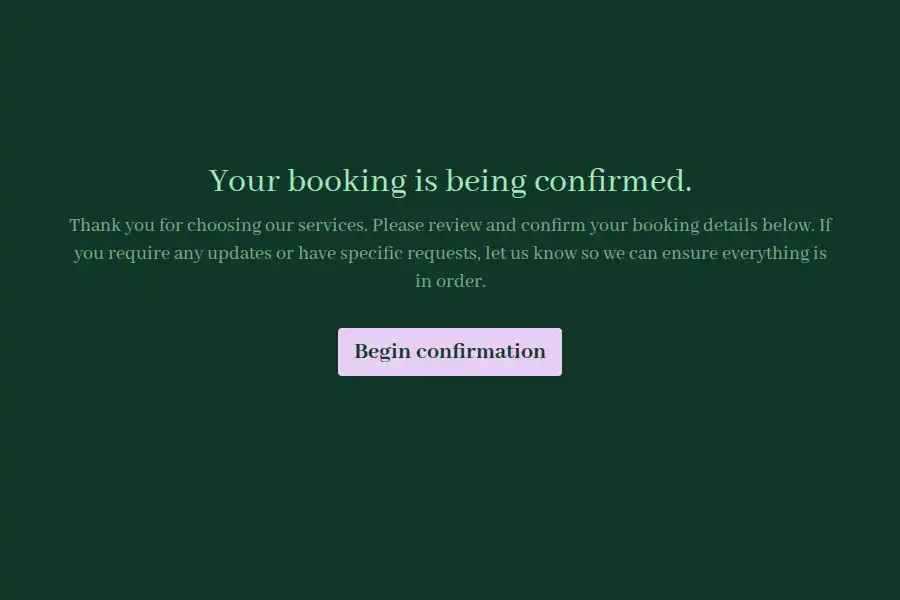
This confirmation-of-booking form is that question, asked properly. Sent ahead of arrival, it has the guest verify every detail of their existing booking, request any changes in writing, and re-commit to the terms — converting the rumor back into a reservation.
Start From the Reference, Not a Blank Page
The guest opens the form with their booking reference in a short text field — the number from their original confirmation — and the rest of the flow already knows the shape of their stay or visit. Recall information can greet them with the booking’s own details — the date, the time, the name it’s held under — so verification means checking, not re-entering. A guest who sees ‘Friday the 14th, 7:30, party of 6 — still correct?’ answers in five seconds; a guest asked to re-describe their booking from memory introduces new errors.
Verify the Details That Go Wrong
Line by line, the quiet failures get caught: the date and time still stand, the party size hasn’t shifted, the name is spelled the way their documents need it spelled. Each of these, wrong at arrival, costs an awkward ten minutes and a reshuffle; caught three days out, they cost nothing. The form asks each as a simple confirm — correct, or needs a change.
The Change Gate
One yes or no question — everything correct, or does something need adjusting? — and a ‘yes, something’s changed’ opens a long text field for the specifics: two guests can’t make it, the time needs shifting an hour, there’s a wheelchair in the party now, the flight lands later than planned. Changes arrive in writing, ahead of the day, while the business can still absorb them — instead of arriving as a phone call during service or a surprise at the door.
Re-State What Guests Forget
The details businesses assume guests know are the details guests have lost: check-in from 3 p.m., where parking actually is, the balance due on arrival, the cancellation cut-off, what to bring. The confirmation restates them plainly and closes with a legal acknowledgment that the guest has read them — one tap that quietly prevents the majority of arrival-day friction, from the parking dispute to the ‘nobody told us about the balance.’
Send It Automatically, Close to the Date
The confirmation earns its keep by timing: roughly seventy-two hours out, when plans have firmed but changes are still fixable. Duplicate the form per event or season, tag each booking’s link with its reference as a hidden field, and deliver it where guests actually read — by direct link in your confirmation email, or straight into their WhatsApp. Guests who respond get a written acknowledgment of any changes; guests who don’t respond have told you something too — the non-responders are your genuine no-show risks, and they’re now a known, callable list instead of a surprise. Bookings and their follow-through live across the booking templates and the event registration library, with the planning side in event planning.
Frequently Asked Questions
What is a confirmation of booking form?
A short pre-arrival form guests complete to verify their existing booking — dates, times, party details — and to request changes in writing. It converts a weeks-old reservation into a current, confirmed one.
When should it be sent?
Around 72 hours before arrival: late enough that plans are settled, early enough that changes can still be accommodated. For week-long stays or hires, a week out works; for dinner reservations, 24 to 48 hours.
How does reconfirmation reduce no-shows?
Three ways at once: it re-commits the guest while the booking is fresh in their mind, it surfaces the ‘actually, we can’t make it’ answers while the slot can still be resold, and it identifies the non-responders — your real no-show risks — as a short, callable list.
How do guests request changes?
Through the change gate: one question on whether everything is correct, and a written field for what’s different. Changes arrive structured and ahead of time — absorbable — rather than as day-of phone calls or surprises at the door.
Can this replace our reminder emails?
It replaces the ones that only remind. A reminder says ‘you have a booking’; a confirmation asks ‘is it still true?’ — and captures the answer. Keep any simple reminder you like; the confirmation is the one that changes what happens on the day.