
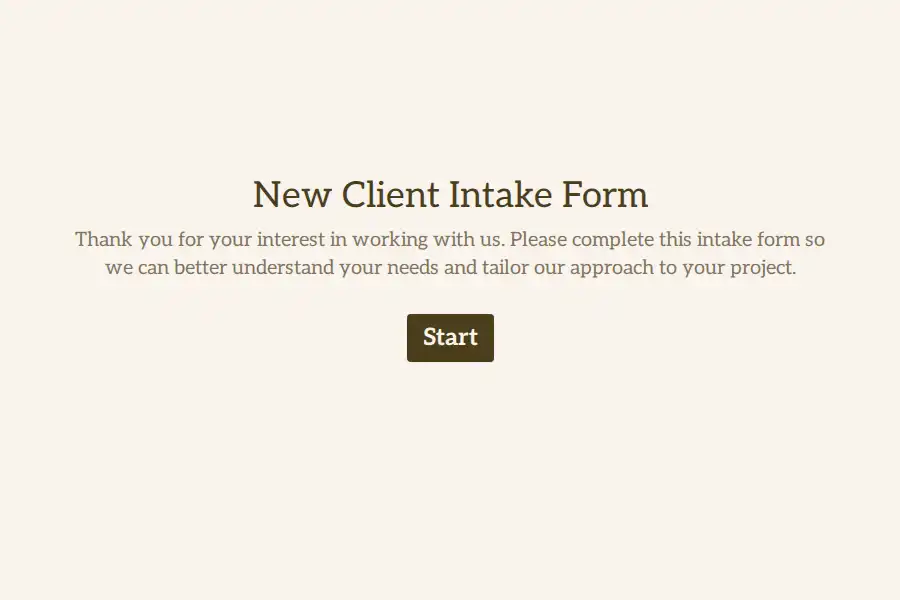
New Client Intake Form Template
Watch the first fifteen minutes of most client meetings and you’ll see the same tax collected again and again: spell the surname, confirm the email, what does your company do exactly, and how did you find us — logistics, gathered live, one conversation at a time, at the highest billing rate either party will ever pay each other. The tax isn’t unavoidable. It’s just uncollected in advance.
This new client intake form template collects the tax upfront. The administrative layer of a new relationship — who’s who, how to reach them, what the company does, where they came from, when to meet — handled in a five-minute form before the first meeting, so the meeting itself starts where it earns its keep: the work.
The Logistics Layer
The intake’s foundation is the contact and company record, captured properly once:
- Who you’re meeting. The contact block — name, email, phone — the fields every later communication depends on, captured with typed validation so the record is clean from birth.
- The decision structure. Two quick fields that change everything about how the meeting runs: who else is involved in the decision (short text), and whether the person you’re meeting decides or recommends. A meeting with a recommender is a different meeting — different content, different close, different follow-up — and knowing beforehand is the difference between pitching the room and pitching the person who isn’t there.
- The meeting itself. Availability preferences and the service they’re interested in, via dropdowns — the latter doubling as your routing key, sending the intake to the right specialist before the meeting is even booked.
The Research Head Start
Two fields convert the intake from a form into a briefing: the company website URL and a long text prompt — in a few sentences, what does your company do, and what’s the project context? Ten minutes of preparation against those two answers transforms the first meeting: you arrive having read their site, knowing their language, with observations instead of questions. Clients experience the difference as competence — they clearly did their homework — and the homework cost you a coffee break.
Where They Came From, and Where They Go
The referral-source dropdown — search, referral, social, event, advertisement — looks like a small field and behaves like a marketing instrument: captured consistently at intake, it becomes the acquisition channel’s true conversion read, because it records what clients say brought them, which is frequently not what the analytics assumed. Where intakes arrive through campaign links, hidden fields stamp the channel automatically, and the self-reported answer cross-checks against the tag — mismatches between the two are themselves intelligence about how word of mouth actually travels.
Clean Data In, Clean Systems Out
Intake data earns its keep downstream, and the template is built for the journey: typed fields throughout mean the record syncs to your CRM through a webhook without a cleanup pass; each new intake notifies the owning specialist via self notification; and the response archive becomes the client’s administrative file from day one — every contact detail, decision structure, and referral fact in one place, growing as the relationship does. Where the relationship continues, recall information pre-fills every future form from this founding record, so the client never spells their company name for you twice.
The template sits in the consultation sub-category, with the discovery-depth sibling in the client questionnaire family and the commercial sequence in the business forms sub-category.
Frequently Asked Questions
Before or after the first meeting?
Before, always — this form’s entire value is the meeting it improves. Send it at booking with a purpose statement (so we come prepared), keep it under five minutes, and never let it compete with a discovery questionnaire: this one handles logistics and research targets; discovery handles strategy. A new relationship needs both, in that order, as separate instruments.
How short can it be?
Seven to nine fields is the working target: contact block, company and website, service interest, decision structure, referral source, availability, and one open context prompt. Every field past that needs a defender — the intake’s job is enabling the meeting, not replacing it, and an intake that takes fifteen minutes has started doing the meeting’s job badly.
What if the client books the meeting before completing the intake?
Send the link in the booking confirmation with a light deadline (two minutes before we meet saves us twenty), and if it arrives incomplete, run the missing fields live at the meeting’s start — then record them properly afterward. The intake is a discipline, not a gate; the goal is that the second client never costs you what the first one did.
Should the referral question offer an incentive?
The how did you hear about us dropdown is measurement, not marketing — keep it clean. Referral incentives belong in a separate, deliberate program; mixing them into intake corrupts the one field whose honest answer has analytics value. If referrals matter to your growth, measure them accurately here and reward them through a channel built for it.
How does this serve teams where multiple people meet the client?
As the shared brief: the intake routes to the right specialist, and the record in the response archive means whoever attends — partner, specialist, account manager — reads the same pre-meeting file. Workspace access scoped by role keeps the team coordinated without exposing every client’s file to everyone, which matters more as the client list grows.