
Tax File Declaration Form Template
Australian payroll runs on a document every new hire must complete, and the consequences of getting it late are mechanical and unforgiving: an employee who hasn’t quoted their Tax File Number within roughly two weeks of starting must, by law, be taxed at the top marginal rate plus the Medicare levy — on their very first payslip. Not as a penalty, not as a choice, simply because the system has nothing else to go on. The employee finds out when their pay is noticeably wrong, and the employer spends the next pay run explaining and correcting. Nearly all of this is preventable with one change: collect the declaration before day one instead of during it. This template digitizes that exact document — TFN details, residency for tax purposes, threshold elections, study-loan status — as a secure onboarding step rather than a paper chase.
What the Declaration Captures
The document’s questions are prescribed by tax rules, and the form mirrors them in order:
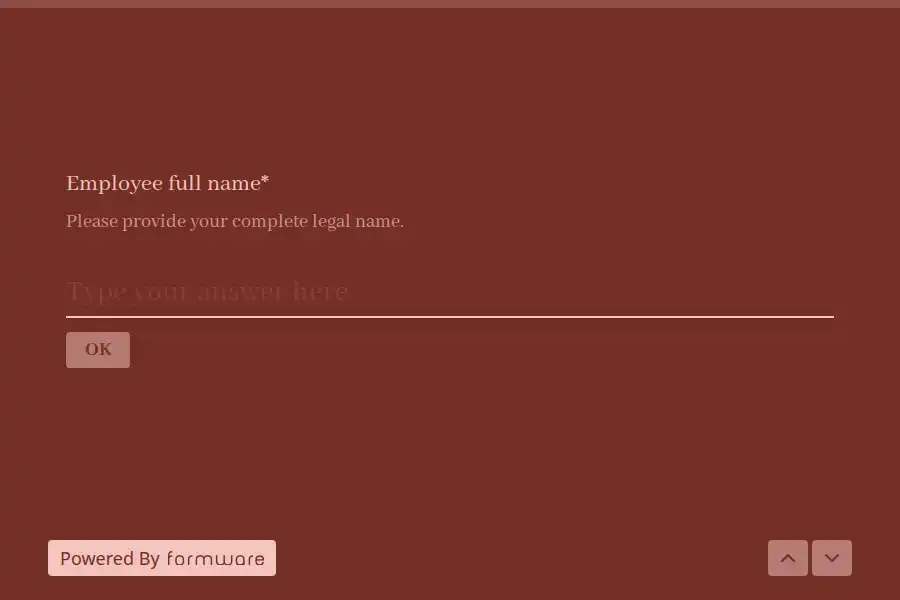
- Identity. Full legal name as it appears on ATO records, date of birth, and residential address — the details your Single Touch Payroll reporting will match against.
- The TFN itself, or a valid reason it’s absent. Employees aren’t obliged to quote a TFN, but the alternatives are narrow and specific — they’re applying for one, claiming an exemption, or citing grounds under privacy rules — and each carries the top-rate consequence until resolved. The form asks which situation applies, so payroll knows what it’s withholding and why.
- Residency for tax purposes. Australian resident, working holiday maker, or foreign resident — the classification that rewrites the entire withholding calculation, covered below.
- The tax-free threshold election. Most residents claim the threshold from their main employer, and only one employer at a time. A second job claiming it too is the classic mid-year surprise for everyone involved. The question belongs on every declaration, every time, because employees forget they’ve claimed it elsewhere.
- Study and training loan status. HELP, VSL and related debts are repaid through the tax system, and the declaration is where employees disclose them — missed disclosures become missed withholdings, which become the employee’s year-end problem and your reconciliation headache.
- Commencement and declaration date. The start date that anchors everything, and the legal acknowledgment that the details are true — the declaration is, formally, the employee’s signed statement to their employer.
Residency Drives Everything Downstream
The three residency categories produce genuinely different withholding outcomes, which is why the question can’t be decorative. Australian residents earn the tax-free threshold and progressive rates. Working holiday makers are taxed at a flat rate from their first dollar — no threshold — a detail that genuinely astonishes backpackers on their first payslip if nobody warned them. Foreign residents face their own schedule entirely. The declaration’s multiple-choice structure makes the classification explicit and auditable, rather than something payroll infers and the employee disputes. Where your rules require supporting evidence for a classification, it attaches directly through document upload.
The Security Question Is Not Rhetorical
A TFN is among the most sensitive identifiers a person has, and mishandling one isn’t an embarrassment — it’s a reportable privacy incident. Every degraded workflow for collecting them carries the same flaw: an unencrypted attachment, a printout in a shared tray, a spreadsheet emailed between accounts. The digital form replaces all of them with a controlled intake: encrypted submission, access restricted to the payroll officers who need it via role-based workspace permissions, and a timestamped record of who declared what and when. The paper ATO form can still be printed from the completed data where the process requires it — but the circulating original is no longer a photocopy drifting through the office.
The Onboarding Workflow, Wired Together
The operational pattern that makes the declaration painless: send the form link with the employment contract or the welcome email — before the start date — with one clear sentence about why it matters (without your TFN, your first payslip is taxed at the highest rate). Employees complete it at home in five minutes; new submissions notify the payroll officer on arrival; every declarant gets an automatic confirmation copy as their receipt. Where your payroll platform accepts integrations, a webhook carries each declaration across so the pay run assembles itself. Employees who misplace their TFN — and plenty do — can keep the form open while they retrieve it through the ATO’s online services, with partial submissions holding their answers meanwhile. TFN holders who can’t provide the number simply declare why, and the form records the withholding basis payroll will apply.
The declaration is one instrument in the wider employment intake — see the employment templates, the business forms collection, and the general forms library for the rest of the onboarding stack.
Frequently Asked Questions
What happens if an employee never provides their TFN at all?
The obligation shifts but doesn’t vanish: you withhold at the top rate plus Medicare levy and keep reporting through STP, and the employee reclaims any excess through their tax return. The practical reality is worse than the mechanics suggest — a payslip that’s visibly short triggers a panic, a dispute, and a rushed TFN recovery, all of which the pre-start declaration prevents. State the consequence plainly in the form’s instructions; employees who understand it find their TFN remarkably fast.
Is the digital declaration acceptable, or must employees sign the paper ATO form?
Employers may collect the information electronically and prepare the paper declaration from it — the employee’s signed digital acknowledgment and your timestamped record cover the declaration’s substance. Where your own process, accountant, or a specific arrangement calls for the wet-ink original, the completed form prints cleanly and travels to the employee for one signature. The digital capture is what prevents the real failure mode: declarations collected in pencil, three weeks after the pay run.
What about superannuation — does this form cover the choice of fund?
Keep them adjacent but separate. Superannuation choice is its own onboarding obligation with its own rules, including the stapled-fund process when an employee doesn’t nominate. The clean structure: one onboarding form for the tax declaration, one for super, both sent in the same welcome email — because bundling everything into a single mega-form slows the one document with a legal deadline attached.
How long do we keep declarations, and who may see them?
Retain tax records for the period your record-keeping obligations require — several years past the employment — and treat access as payroll-only. TFN details shouldn’t sit in a general HR folder, appear in onboarding checklists, or travel in reports to managers. The response archive with restricted access answers the retention question and the access question in the same structure: everything on file, visible to the officers whose job requires it, and nobody else.