
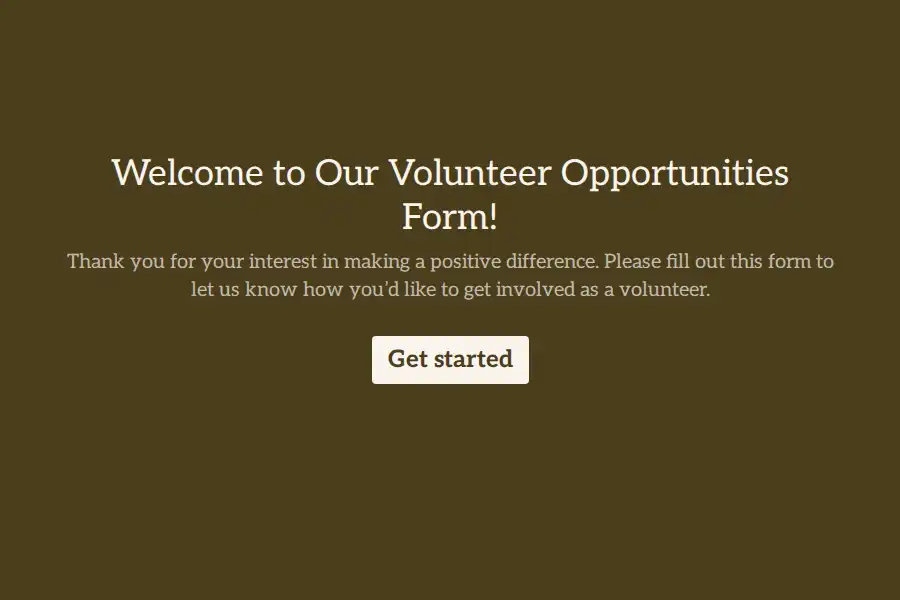
Volunteer Interest Form Template
Volunteers rarely quit because they ran out of time. They quit because of fit — the detail-lover stationed on a chaotic welcome desk, the natural talker left alone with spreadsheets, the trained accountant stuffing envelopes. An interest form is your first line of defense against mismatched placements: a short profile that tells coordinators not just who wants to help, but where each person will do their best work.
Fit Is a Retention Strategy
This template occupies deliberate middle ground. It goes deeper than a quick signup — you are building placement-ready profiles, not just collecting names. It stays lighter than a formal application — there is no screening or approval gate, just discovery. The goal is simple: by the time you make the first placement, you already know each person’s strengths, motivations, and rhythm.
What Every Submission Tells You
Each response assembles a small but complete profile:
- Who they are and where they are based — contact basics through a contact question, plus a city or postcode field for matching people to nearby program sites
- Which roles attract them — a multiple choice list mirroring your actual openings: outreach, events, admin support, tutoring, logistics
- What they can do — an open long text question for professional skills, certifications, and past experience, with an optional file upload for CVs or credential documents
- Why they are here — the motivation question is the quiet workhorse. A person seeking social connection belongs in public-facing roles; someone chasing professional experience may be your next project lead
- When they are free — a structured dropdown for weekday, evening, or weekend rhythms
Turning Profiles Into Placements
The form is only half the system — the review habits complete it:
- Review submissions weekly and sort by skill before filling any role
- Route specialists first: a certified teacher, a designer, a native speaker of a language your community needs
- Filter by availability when a shift or recurring slot opens, and invite only matches — no spray-and-pray asks
- Connect submissions to your volunteer CRM via webhook so profiles flow straight into the tool your team already uses
- In shared programs, invite fellow coordinators into your workspace so placement decisions never bottleneck on one inbox
Learn Which Channels Send Your Best People
Add a hidden field to the links you share — one tagged for the newsletter, another for a partner’s post. Over time you will see not just which channel brings volume, but which one brings volunteers whose skills actually match your needs. That is the difference between growing a list and growing a bench.
Frequently Asked Questions
How is an interest form different from an application form?
An interest form profiles people for placement and has no approval gate; an application screens candidates for roles that require vetting, references, or consent. Use the interest form to understand your pool, and reserve applications for positions with duty-of-care requirements.
How long should this form take to complete?
Five to seven minutes. That is enough room for skills, motivations, and availability without testing anyone’s patience. If a question would not change your placement decision, remove it — depth matters only where it informs a match.
Should I really ask volunteers for CVs?
Make it optional and explain why: some roles — bookkeeping, design, grant writing — benefit enormously from seeing real experience, while many others need nothing of the sort. Optional uploads keep community-focused roles barrier-free while letting professionals raise their hands.
How do I use motivation answers when placing people?
Match the why to the what. Socially motivated volunteers excel in greeting, outreach, and event roles. Career-driven volunteers often prefer structured projects with visible outcomes. Mission-driven veterans frequently become your most reliable recurring shift-takers. One question, three very different placements.
What if someone's skills do not match any current role?
Keep them warmly on file and tell them the truth: no match today, first call when one appears. Skilled volunteers respect honesty far more than a bad-faith placement — and the mismatch note often becomes the perfect brief for a role you had not yet designed.