
Every Organization Needs One Logbook
Most workplaces don’t lack incident reports — they lack a incident report. A near-miss gets mentioned at the toolbox talk, a damaged pallet gets a photo in the group chat, a customer’s slip gets a phone call to the office, and three months later nobody can answer the only question that matters: how often does this actually happen?
The all-hazards logbook fixes the fragmentation. One form, one link, every category of unexpected event — because the value of incident data comes from completeness, and completeness comes from making the reporting act identical regardless of what happened.
What Gets Logged
The classification question is the form’s engine — a multiple choice covering your real hazard inventory:
- Injury to a person, first aid or beyond
- Near-miss — something could have gone badly wrong and didn’t
- Damage to property, vehicle, or equipment
- Environmental — spill, discharge, waste issue
- Security or access concern
- Behavior — a shortcut, a skipped step, a rule bent
That last category is deliberate. The logbook that only accepts disasters teaches people to wait for disasters; the one that logs near-misses and risky behavior is the only kind that produces prevention data.
The Five-Minute File
Everything after the classification serves speed, because frontline reporting competes with the end of a shift:
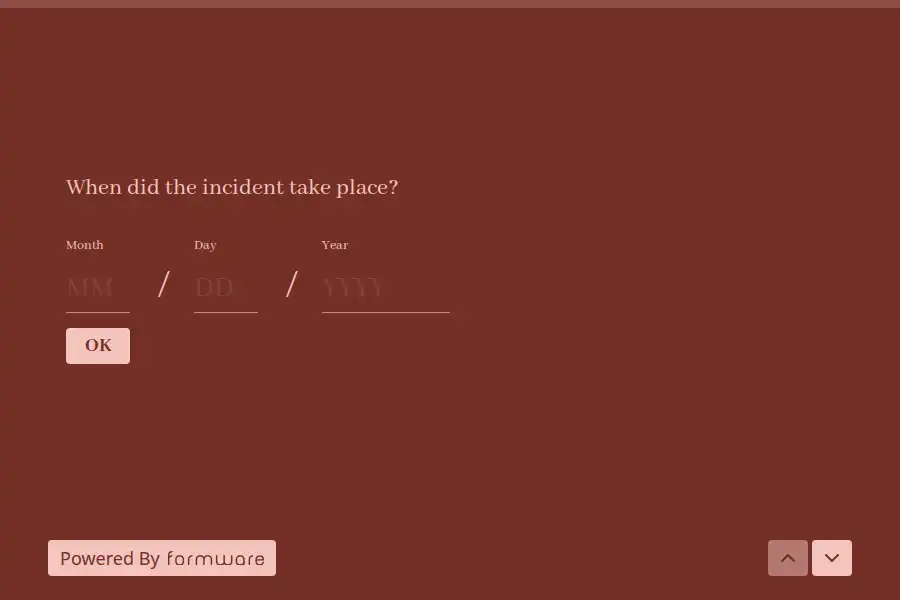
- When and where — a date field and a location line.
- What happened — a long text field with one instruction: facts and sequence, no blame, no causes. Causes belong to the investigation that follows; this is the logbook entry.
- Immediate outcome — anyone hurt, anything damaged, anything stopped — a compact yes/no battery.
- Photo of the scene — through document upload, straight from the phone that’s already in their hand.
- Done. Name optional for near-misses; required where follow-up is needed.
Every submission pings the safety inbox via a self notification, and the response archive becomes the trend file: counts by category, by site, by month. The hidden fields on each site’s link tag entries automatically, so multi-site trends read themselves.
From Logbook to Safety Program
The logbook’s numbers drive everything downstream: the categories that repeat become investigation priorities, the near-miss clusters become toolbox topics, and the quiet months get audited for under-reporting rather than celebrated. Reports that need deeper work graduate to a formal investigation; the logbook entry is where that paper trail begins. Nearby operational formats live in the business forms collection.
Frequently Asked Questions
What counts as an incident worth logging?
If it surprised someone, log it. The near-miss category exists precisely because the events that almost happened carry most of the prevention value — and they’re free to report.
How do we get frontline staff to actually file?
Three levers: the form takes five minutes on their own phone, filing never triggers blame, and the team sees at least one visible fix that came from a report. Under-reporting is a design problem, not an attitude problem.
Isn't this duplicating our accident form?
They’re different instruments at different stages: the logbook catches everything, immediately, in five minutes. Accidents that warrant depth then get a full investigation. The logbook is the net; the investigation is the analysis.
Who can read the logbook?
Safety leadership and site managers — access set through role permissions. Broad read access keeps the near-miss channel honest; anything involving a named individual stays with the investigators.