
The Bank Detail Scam That Targets Your Finance Team by Name
The email arrives from a supplier you pay every month: ‘We’ve changed banks — please update our remittance details.’ The signature is right. The logo is right. The account is real. And it belongs to a fraudster, because the real supplier’s mailbox was compromised last Tuesday. Payment diversion scams like this one drain more from businesses than any other wire fraud, and every one of them exploits the same weakness: bank details that were collected or changed through an unverified channel.
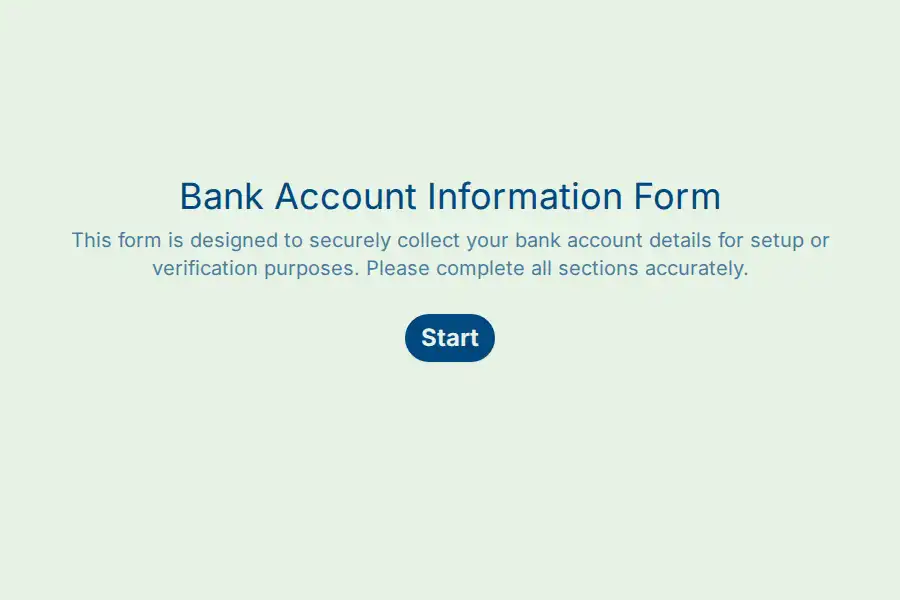
This bank account information form template rebuilds vendor payment setup as a controlled process — structured data, independent verification, and a trail that shows who submitted what, and when.
What Accounts Payable Actually Needs to Pay Someone
- The legal entity — the vendor’s registered name in a short text field, which must match the name on the bank account and the invoice. Mismatches here are the classic first red flag.
- Account holder and institution — the name as the bank holds it, plus the bank’s name, captured separately from the entity name; ‘same thing, surely’ is precisely the assumption fraud relies on.
- The payment coordinates — routing or sort code and account number in dedicated number fields, with the account type selected from a dropdown so the payment engine gets exactly what it expects.
- Remittance details — where advices go: an accounts-receivable email and the vendor’s website via a website field, so payment confirmations land with the vendor’s finance desk, not a personal inbox.
- Payment arrangement — one-time or recurring, selected plainly, because the two carry different approval weights and a recurring mandate deserves a harder look.
Trust the Form, Verify the Source
The form captures the data; verification is what defeats fraud. Require the evidence — a file upload field for a voided check, bank letter, or statement header — and pair it with the control auditors now expect: callback verification. Before first payment, your team calls the vendor on a phone number found independently — not one supplied in the submission or the email that prompted it — and reads the account details aloud for confirmation. The two-step takes ten minutes and neutralizes the entire scam category.
Bank Detail Changes Are the Real Attack Surface
Fraud rarely enters through a new vendor; it enters through a change to an existing one. Treat every update as a fresh event: issue the form again, collect new evidence, and repeat the callback — never honoring changes that arrive by email alone. Your record of each authorization, signed via the legal field and timestamped, becomes the artifact that either proves your process or exposes its absence.
An Audit Trail AP Can Hand to an Investigator
Every submission lands with an instant alert to the AP desk, flows into your ERP or accounting stack through webhooks, and accumulates in a filterable response history — who submitted, what evidence, which approval. Viewer seats let procurement and auditors consult records read-only, while role-based permissions keep edit rights with finance alone. Vendor and payment workflows sit alongside the payment templates collection and the wider business forms library.
Frequently Asked Questions
How is this form protected against payment diversion fraud?
By pairing structured capture with independent verification: the vendor uploads documentary evidence, your team calls a phone number sourced independently of the submission, and no change is honored on email instructions alone.
Which verification documents should we require?
A voided check, a bank letter, or a statement showing the account holder, account number, and routing or sort code. The document should match the entity name on the form — a mismatch is your first stop sign.
How should we handle a vendor requesting an account change?
As a brand-new submission: fresh form, fresh evidence, fresh callback. Change requests delivered by email are the fraudster’s favorite channel, which is why email-only changes should have no approval path at all.
Can the form collect tax documentation alongside banking details?
Yes — many teams attach W-9 or equivalent tax forms in the same upload step, completing vendor onboarding in one pass instead of three emails.
Who should be able to approve and view vendor banking records?
Edit and approve rights sit with accounts payable; procurement and auditors work from read-only access. The separation matters — the team that pays should not be the only team that can see what was authorized.