
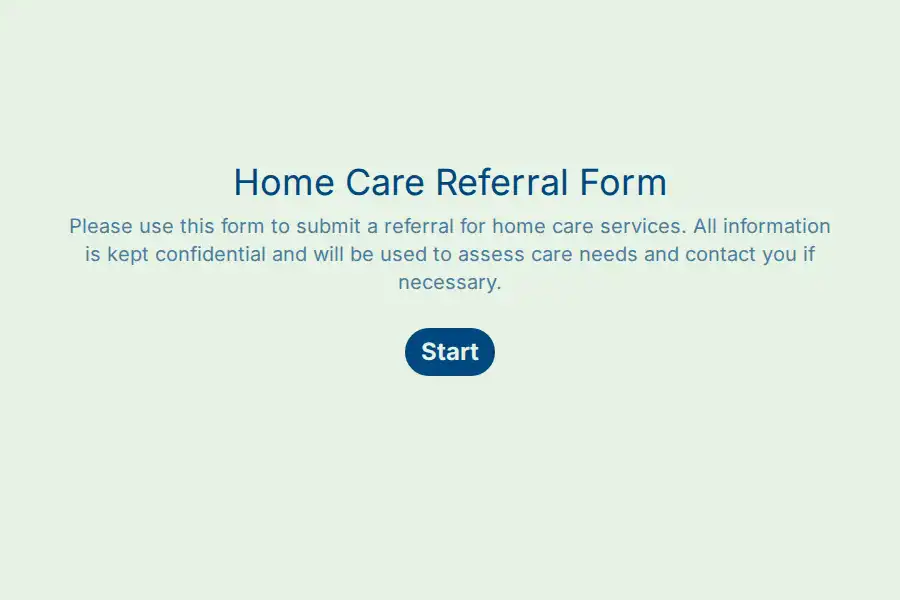


Home Care Referral Form
The call usually comes from a daughter, on a lunch break, somewhere between worry and overwhelm. Mom is managing, mostly, but the stairs are getting harder, the fridge is emptier than it should be, and last week the stove was left on. She needs help at home — the non-medical kind: companionship, meals, a steady presence, someone to drive to appointments. And the agency on the other end of the phone needs to turn this emotional, fragmented, mid-lunch call into a care arrangement that actually fits her mother’s life.
This home care referral form gives that conversation a home. One structured referral that captures who needs care, what their days look like, what kind of help fits, when it should start, and the personal details — the routines, the preferences, the small things — that separate care that feels right from care that merely happens. Families complete it calmly at their kitchen table instead of reconstructing their parent’s life over the phone; agencies receive a referral they can act on instead of a phone message they have to decode.
What Non-Medical Home Care Actually Involves
Referrers outside the industry rarely know what agencies can provide, so the form educates while it collects. A dropdown menu of service categories walks the family through the realistic options: companionship and conversation, meal preparation, light housekeeping, transportation and errands, medication reminders, personal care assistance, respite for family caregivers. The act of selecting is itself clarifying — many families arrive asking for one thing and leave having identified three.
Because every selection routes the referral to the right care coordinator and shapes the matching process, the categories should mirror the agency’s actual service lines. A referral that requests what the agency genuinely offers is a referral that converts into scheduled care.
Describing a Life, Not Just a Client
The difference between adequate care and care that lasts is context, and the form makes room for it. Alongside the practical basics — age, living situation, contact preferences — a long text section invites the picture that matters: what does a good day look like for your mother? Is she a morning person? Does she light up talking about her garden, her church, her late husband? Any mobility considerations, hearing difficulties, routines the caregiver should respect?
These details feel soft and function like gold. The caregiver who arrives knowing that Mrs. Okafor takes her tea at ten and does not like the radio on is a welcome guest from the first visit. The family sees the difference immediately — and referrals built on this level of understanding are the ones that turn into years of service rather than a month of mismatches.
Schedule, Start Date, and the Practical Frame
Care arrangements live or die on logistics, so the form collects them precisely: preferred days and times of day, weekly frequency, and the requested start date captured through a date field. Whether care is needed immediately after a hospital discharge or being planned gently for the months ahead changes everything about how the agency responds — urgency belongs in the referral, not discovered in a follow-up call a week later.
An authorization yes/no confirmation documents that the person completing the referral has the standing to share the client’s information — a small step that keeps the agency’s handling of family-submitted details clean from day one.
Meeting Families Where They Already Are
The families making these referrals are frequently coordinating siblings from three cities, and the referral link needs to travel the way family coordination actually happens. A tap-to-chat link built with the WhatsApp link generator lets the daughter who started the referral forward it directly to her brother, and WhatsApp forwarding lets the agency nudge an unfinished referral in the channel families demonstrably answer. Because long-form referrals about a parent’s care are emotionally heavier than most forms, partial submissions matter here too: the family that needs a day to gather their thoughts should not have to start over.
Related intake formats for care services are collected under healthcare form templates.
Frequently Asked Questions
What is a home care referral form?
A structured intake that tells a home care agency who needs support, what kind of non-medical help fits their life, when services should start, and the personal context that makes care feel right. It replaces phone-tag and handwritten notes with one complete referral that coordinators can act on immediately.
Who can submit a referral?
Whoever is arranging care: adult children, the clients themselves, social workers, hospital discharge planners, physicians’ offices, or neighbors. The form captures the referrer’s name and relationship to the client, which tells the agency exactly who their point of contact is — and whose answers carry authority for scheduling decisions.
How detailed should the care notes be?
Detailed enough that a caregiver could walk in tomorrow and have a good first day. Routines, preferences, personality, mobility considerations, sensitivities — the notes field exists precisely for the knowledge that only family holds. Agencies consistently report that rich notes shorten the matching process and improve first-visit success.
Can the referral be completed by family members in different locations?
Yes — and encouragingly. One family member typically starts the referral and shares the link with siblings, who add what they know. Partial submission capture means nothing is lost between contributors, and the agency receives one consolidated picture rather than three conflicting phone descriptions.
How is client information protected?
Referrals carry personal details that deserve careful handling: submissions are stored securely, access is limited to agency staff involved in coordination, and the authorization confirmation documents that the referrer had standing to share the information in the first place.
What happens after a referral is submitted?
The agency’s care coordinator reviews the referral, matches the request to available caregivers, and contacts the referrer to schedule a start-of-care conversation — typically within one business day for standard requests, faster where the start date indicates urgency.