
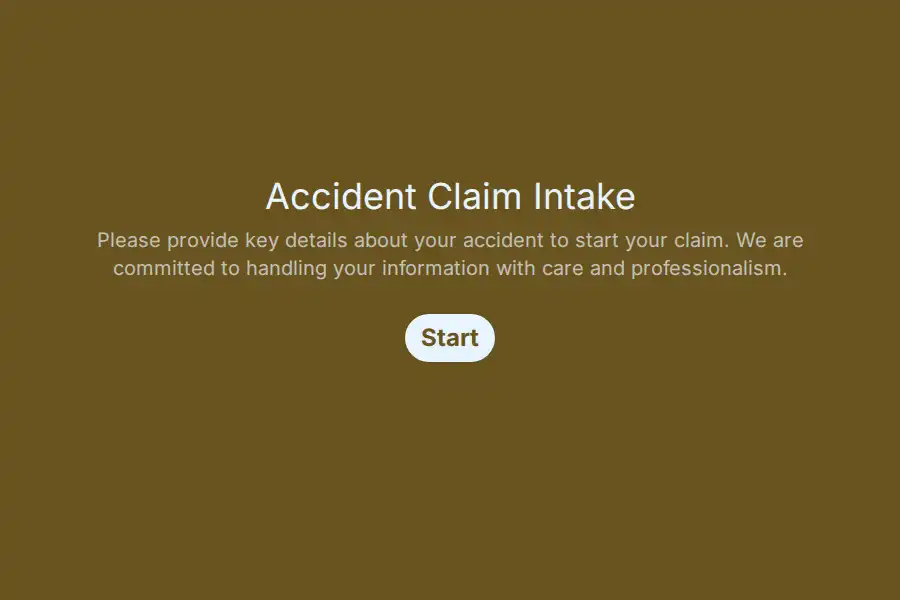
The Claim That Doesn’t Come Back
Ask any claims handler what slows settlement and the answer is rarely fraud or complexity — it’s incompleteness. The claim that arrives without the third party’s insurer. The damage total with no itemization behind it. The incident account that never mentions the witness everyone else is citing. Each gap triggers a request for information, and each round-trip adds a week to a settlement the claimant already needed.
This form is built around one ambition: a claim so complete it never generates a follow-up letter. Every section exists because its absence is a known cause of delay.
The Complete Claim, Section by Section
- The policy, matched. Policy number and named insured — the match against the carrier’s book that opens the file, captured exactly as the documents spell it.
- The event. When, where, and what kind — a date field, a location line, and a multiple choice of claim types: vehicle, property, public liability.
- The account. The claimant’s description in a long text field — what happened, in sequence, without speculation about fault. Written close to the event, this is the freshest account that will ever exist.
- The other parties. Everyone involved: drivers, property owners, insurers — named with their details. The un-named third party is the single most common cause of claims stuck in limbo.
- The damages, itemized. Each item of loss with its amount — number fields, not one hopeful total — because assessors verify against line items and return lump sums on principle.
- The evidence. Photos, reports, receipts — attached via document upload at filing, when they exist, rather than requested afterward when they’ve scattered.
The Liability Question, Asked Honestly
One multiple choice captures the claimant’s own view of fault: clearly the other party, shared, unclear, or theirs alone. Handlers need the position stated; honest uncertainty is more useful than confident guesswork, and the form says so.
Filing From the Scene
The best claims are filed where the accident happened: photos taken at the scene through the phone, details captured while everyone involved is still present to exchange them. A self notification pings the claims desk the moment a submission lands, and every claimant receives an automatic acknowledgment with their claim reference — the first promise of the process, kept in seconds. Claims at volume flow into the handler’s system via webhooks. Related formats sit in the insurance-adjacent collections and the request shelf.
Frequently Asked Questions
Should the claim be filed before or after the insurer's own assessment?
Before — the claimant’s complete account and evidence set the baseline the assessment works from. Waiting for ‘the official process’ just means the freshest evidence ages out first.
What if the other party disputes my account?
That’s what the evidence section is for: scene photos, witness details, and the itemized damages do the arguing. The claim states a position; the evidence defends it.
Can one claim cover several types of loss?
Yes, itemized — vehicle damage and personal property and medical costs each get their own lines. Bundled totals force the assessor to unbundle anyway, at the claimant’s delay.
How long does a complete claim take to settle?
Complete claims move in weeks; incomplete ones in months. The entire difference is usually the third-party details and the itemization — which is precisely what this form makes unavoidable.