




The Claim Form That Runs in Reverse
Every other form in this collection moves money toward a patient. This one exists because money went out that should not have: a duplicate payment, a coding error, a secondary payer that turned out to be primary. Returning overpayments is not optional housekeeping — identified overpayments carry reporting obligations and deadlines, and the refund file is exactly what auditors ask for first.
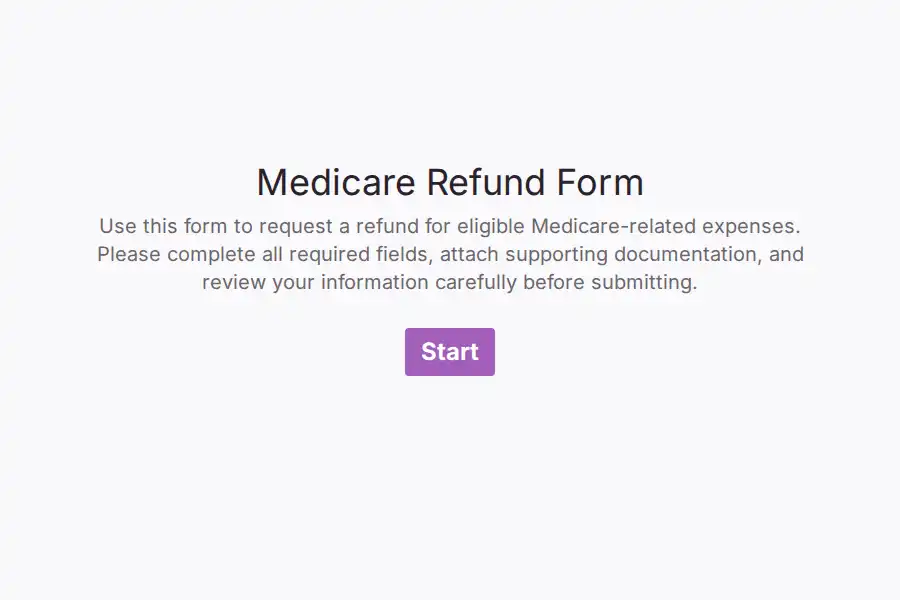
This request form standardizes the return: claim matched, reason stated, amount declared, evidence attached — one refund, one record, defensible on review.
Start With the Transaction Being Undone
A refund without its anchor is a mystery; the anchor is the original claim:
- The original claim or reference number — the field that ties the refund to the exact payment being returned. No matching number, no matching payment, no processing.
- The payment date and the amount received — what came in, and when, stated plainly in a number field.
- The beneficiary whose account the overpayment touched — name and identifier, so the return posts to the right record.
The Reason Is the Document’s Heart
Auditors do not ask ‘was the money returned?’ — they ask ‘why was it owed back?’ A dropdown question of standard reasons — duplicate billing, incorrect coding, primary coverage discovered after payment, service cancelled — sorts the routine cases, and a long text field carries the specific explanation: which claim duplicated which, which code was wrong and what replaced it, which insurer paid primary and why that changed the ledger. The narrative written today is the audit answer provided months from now, for free.
The Evidence and the Declaration
The remittance advice showing the original payment, attached; the corrected billing where one exists, attached. A declaration step closes the request: the identified overpayment, the return amount, the submitter’s authority to request it. The completed record — identified, explained, evidenced, declared — is the compliance artifact the reporting timeline assumes exists.
The File Auditors Ask For
Because every refund is a record rather than an email, the archive matters: submissions retained in the response records, attached evidence stored with each request, and webhooks mirroring each refund into the accounting system the auditors reconcile against. Billing teams handling volume keep submissions visible only to authorized staff through role-based permissions.
Frequently Asked Questions
Who files this request — the patient or the provider?
Overwhelmingly the provider side: billing offices, practice managers, and hospital finance teams returning payments identified in their own reconciliation or flagged by reviewers. Patients occasionally return mistaken payments, but the form’s fields — claim numbers, remittance advice — assume a billing context.
How quickly should an identified overpayment be returned?
Reporting obligations commonly run on the order of sixty days from identification — and the clock is not the risky part. The gap between identifying and documenting is where refunds get lost; filing the structured request the day the overpayment is confirmed closes both.
What if the reason does not fit a standard category?
The dropdown covers the recurring cases; the explanation field carries everything else. An unusual reason, fully narrated, is unremarkable — an unusual reason, undocumented, is an audit finding.
Can partial refunds be handled?
Yes — the amount field states what is being returned on this request, and separate requests separate separate identified amounts. One refund per identified overpayment keeps the trail legible.