
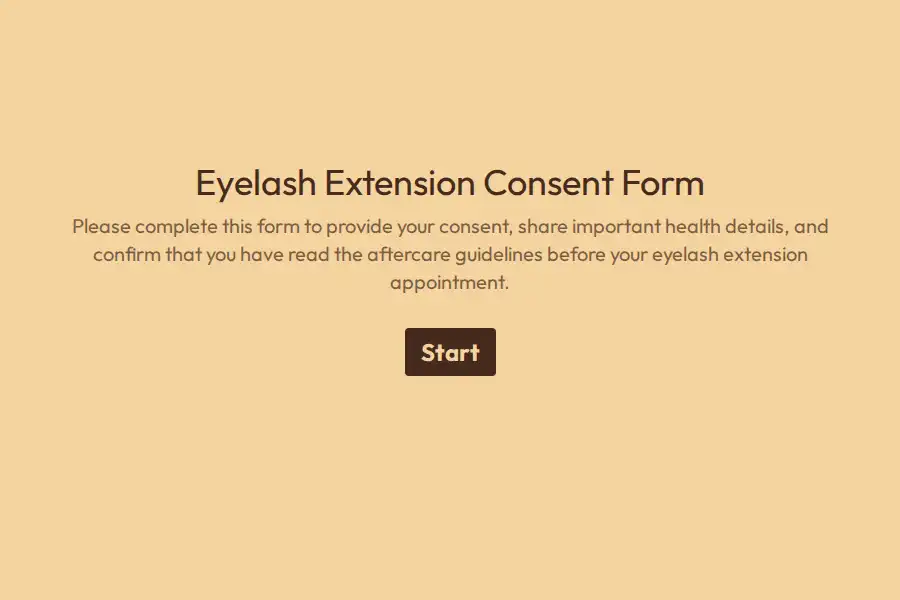
Eyelash Extension Consent Form Template
On the day a client emails about a reaction, or disputes a set that shed within a week, the only document that speaks for your studio is the one she signed. Consent paperwork is not a courtesy at the door; it is the record that she was told what the service involves, understood the risks, and accepted the aftercare obligations that keep a set looking the way it left the studio. Everything else — memories, verbal reassurances, a laminated aftercare card nobody kept — is evidence of nothing.
This eyelash extension consent form template produces that record, properly worded, signed, and stored where you can produce it.
What a Consent Record Must Establish
Three things, in order: that her disclosures are truthful, that the risks are understood rather than scrolled past, and that aftercare is accepted as a condition of the service — not a suggestion. Every clause below serves one of those three.
Clauses Worth Writing Down
- The risks, plainly. Mild irritation and adhesive sensitivity described in everyday language — informed means readable, not legalistic.
- Testing acknowledged. A line confirming that any pre-treatment patch test your protocol requires was offered, and its outcome honestly reported.
- Aftercare as obligation. First-night dry, forty-eight hours oil-free, no picking or rubbing — framed as conditions of the set, because that is what they are.
- Where obligation lands. An explicit acknowledgment that skipped aftercare changes what the studio stands behind. This single clause quietly resolves most retention disputes before they start.
Signing and Storing
The legal question type captures acceptance with a timestamp, set as required so no set begins unsigned. Completed consents archive in your response records, with staff access controlled through role permissions — every artist can see who signed, nobody edits history. To make the document read as yours rather than a third party’s, put it on a custom domain and remove platform branding; a consent form carries more weight when the whole page belongs to the studio.
Keeping It Current
Consent goes stale the moment health or medications change. Re-sign annually: duplicate the form at the start of each year, close the prior version, and let the archive preserve which language was live on the date each client signed. Related client-facing paperwork lives in the broader forms collection.
Frequently Asked Questions
Is an electronic acknowledgment a valid signature?
A timestamped acceptance tied to a stored record is the modern norm across service businesses. Enforceability varies by jurisdiction, so have counsel approve your clause wording once — then this form applies that approved language, signed and dated, to every client.
Does one signing cover all her future visits?
Best practice says no: re-sign annually at minimum, and immediately after any change in health, medication, or pregnancy status. The archive makes each re-signing a two-minute touchpoint rather than a project.
How should minors be handled?
A parent or guardian completes and signs on the minor’s behalf, and the record notes that the signer is the guardian. Some studios also require the minor present; encode whatever your insurer expects directly into the form’s instructions.
Does the aftercare clause actually reduce disputes?
It changes their shape. When shedding follows skipped aftercare, the conversation is no longer your word against hers about what she was told — the signed acknowledgment moved the obligation to her side at the start, and most disputes deflate the moment it is produced.