
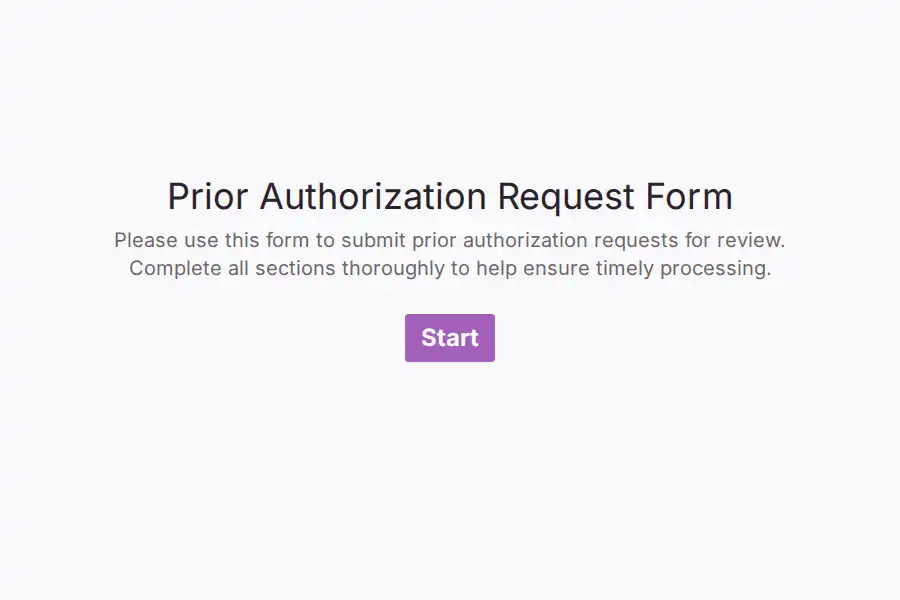

The Procedure Is Booked. The Approval Isn’t.
Every scheduling desk knows the collision: the surgery is on the calendar for the 14th, the referral is signed, the patient has arranged time off work — and the authorization is still sitting in a payer’s queue. Prior authorization is the only document in the care-and-claims universe that must exist before the event it concerns, and approvals stall most often for one reason: the request arrived incomplete.
This template produces approval-ready requests. Every field exists because its absence is a documented denial reason: the identifier that failed verification, the code that did not match, the justification the reviewer found insufficient.
The Denial-Prevention Field Set
- Who is asking. The requesting provider’s name, practice, and NPI — the credential verification that rejects requests before a human reads them when it is wrong.
- Who is covered. Patient identifiers and the member or plan ID — matched against eligibility before review begins.
- What is requested. The specific service, procedure, or medication, with its code — the line item the approval, when it comes, will name verbatim.
- When it is needed. The requested treatment date — which turns an open-ended request into a schedulable decision.
- Why it is necessary. The clinical justification in a long text field — diagnosis, conservative treatments tried and failed, the specific clinical facts that meet the payer’s own criteria for medical necessity.
- The proof. Chart notes, imaging reports, prior therapy records — attached via document upload as evidence rather than promised as ‘available on request’.
Urgent Means Routed Differently
One yes/no question changes everything downstream: does delay jeopardize the patient? Expedited reviews run on different clocks through different channels — but only when the request announces itself as urgent, with the clinical reason attached. The flag routes the submission to the expedited pathway and, internally, to the staff member who chases payers. A routine review buried in the urgent queue serves nobody, and an urgent one lost in the routine queue is the failure this field exists to prevent.
Managing the Pending Pile
Requests, once sent, enter the least visible phase of healthcare administration: pending. Tracking them lives in the response records — filterable by payer, urgency, and treatment date, so the request whose procedure is nine days out rises to the top without anyone maintaining a spreadsheet of memory. Staffing the chase works under role-based access; clinical details stay with clinical staff.
The surrounding claims and coverage documents sit in the healthcare forms collection.
Frequently Asked Questions
Who completes this request — clinician or admin?
The clinical substance is the clinician’s: the justification, the codes, the evidence. The administrative shell — identifiers, contacts, dates — is safely delegated to coordinators, and the split structure makes the handoff explicit.
What are the most common denial reasons this form prevents?
Missing or invalid provider identifiers, diagnosis and procedure codes that do not align, absent evidence of conservative treatment first, and justification that states the request rather than the medical necessity. Every section above maps to one of them.
What makes a request genuinely urgent?
Risk of serious jeopardy to the patient from waiting the standard review period — not scheduling convenience. The distinction matters because expedited pathways verify the claim, and an inflated urgency flag damages the next genuinely urgent request.
How far ahead of treatment should requests go?
As early as the payer’s window allows — routinely weeks for elective procedures. The treatment-date field exists precisely because ‘soon’ is not a scheduling fact the payer can act on.