


Where Referrals Go to Disappear
The referral process between practices runs on a quiet leak: sent by fax, receipt unconfirmed, appointment eventually made — and the specialist’s report drifting back weeks late or not at all. The referring physician learns the outcome from the patient, or from nobody. Every leaked loop is a care gap wearing an administrative costume.
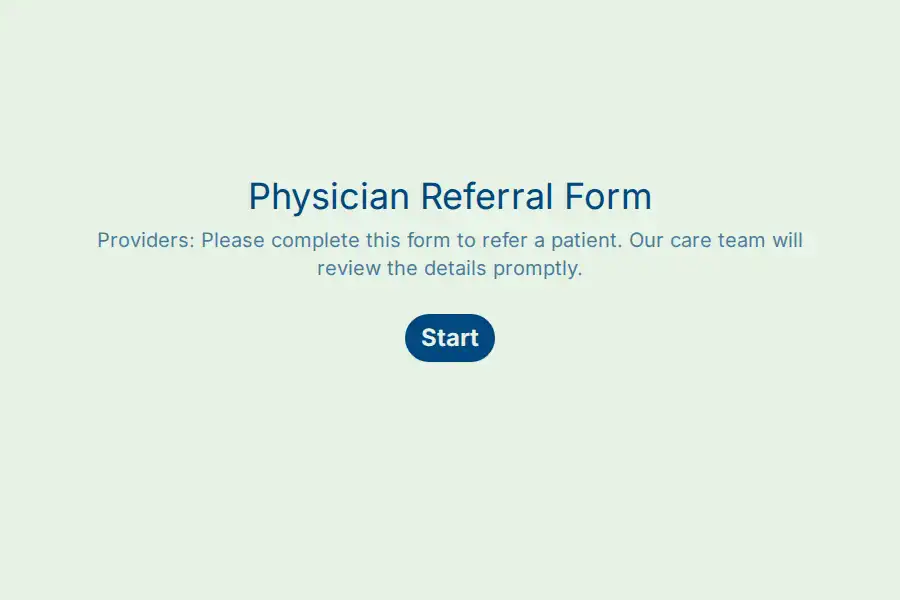
A structured referral fixes the outbound half; loop tracking fixes the return. This form is both.
The Referral Packet
- From. The referring practice and clinician, with the contact point the specialist’s office should use for the call that prevents three emails.
- To. The receiving specialty and, where known, the named clinician or practice — plus the patient’s identifiers for record-matching on arrival.
- The question. Why this patient, to this specialty, now — the referring clinician’s actual question in a long text field, which is the sentence the specialist reads first.
- The evidence. Current results, recent letters, relevant imaging — attached via record upload so the first appointment starts informed instead of requesting a re-send.
- The permission. The patient’s agreement for records to move between the practices — one legal step, captured with the referral rather than chased after it.
- The window and the booker. How soon the patient should be seen, and which practice contact handles scheduling — the two facts that turn a referral into an appointment.
The Loop, Tracked to Closure
A referral isn’t complete when it’s sent; it’s complete when the answer comes home. The response view doubles as the referral log — sent, booked, attended, reported — and webhooks update the practice’s own system as each stage lands. The open-loop list is the referral coordinator’s morning: every patient currently between practices, and how long they’ve been there. Adjacent care-transition paperwork sits in the healthcare forms collection.
Frequently Asked Questions
Is patient consent really needed for every referral?
Where records move between organizations, yes — and capturing it with the referral rather than afterward removes the most common cause of stalled exchanges. The consent should name the two practices and the purpose.
Who actually books the appointment?
The receiving practice, using the stated window — urgent referrals inside days, routine inside weeks. The window field exists so ‘soon’ never has to mean whatever the scheduler’s week implies.
How does the report get back to the referrer?
Through the same structured channel: the receiving practice returns findings against the original question, and the loop log marks the referral closed only when that answer is recorded.
What about genuinely urgent referrals?
Phone first — a form is not an escalation path. The urgent conversation happens by voice, and the form follows as the record of what was agreed.