
The Sheet Every Responsible Organization Keeps
Somewhere between a sign-up list and a clinical file sits the document nearly every youth program, club, camp, and community organization improvises badly: the participant record. A parent hands a child to your swim school. A new member joins the hillwalking club. A volunteer signs on at the community garden. From that moment your organization is responsible for a person — and responsible people know who to call and what to know.
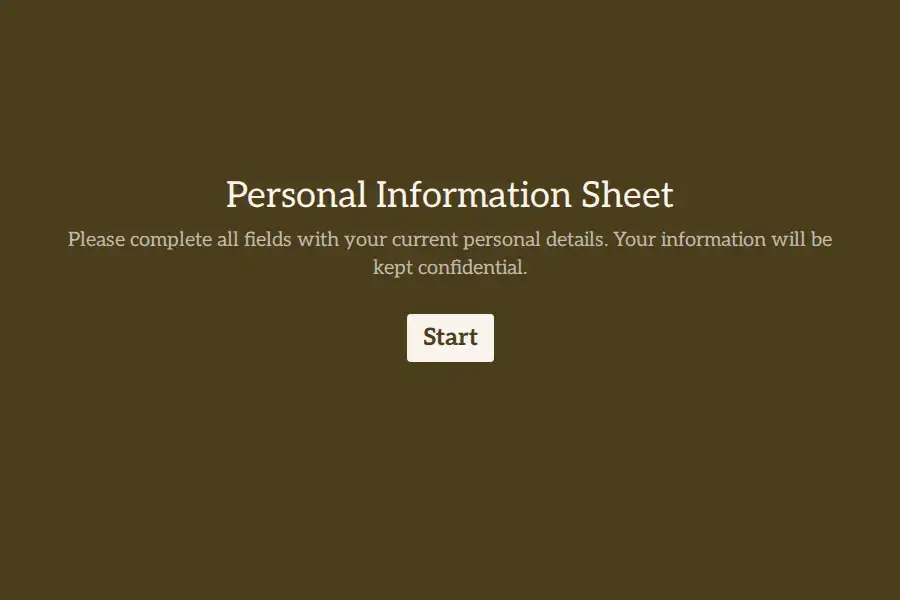
This personal information sheet gathers exactly that, once per participant, in a shape a supervisor can actually use on a loud Saturday morning.
What Goes on the Sheet
- Who they are. Name, birth date, and the roster basics — one contact block keeps identity tidy for the season.
- The call-first contact. The one number a supervisor dials when anything happens — with the relationship noted, so nobody phones an estranged relative by accident.
- Collection permissions. For child programs especially: exactly who may collect, and who may not — a yes/no plus names pattern that ends the end-of-session guessing game.
- Support notes. Whatever supervisors need in order to include this person well — accessibility needs, dietary boundaries, the fear of deep water, the inhaler in the left pocket. Operational notes, deliberately not a medical record.
- Photography consent. Whether this person may appear in the club newsletter or the program’s social feed — one legal acknowledgment captured before the first group photo, not after.
- Season dates. When the record was taken and which season it covers — a date field that makes staleness visible.
Running It Across a Program
Issue the sheet at sign-up and publish the link wherever enrollment happens; keep a blank copy on a tablet at check-in for the grandparent who arrives with a grandchild on a free trial. Refresh every season — records rot faster than rosters — and hold completed sheets with the program lead rather than circulating them: restricted viewing rights beat a group chat for anything about minors.
Rosters and the paperwork surrounding programs live in the school templates and the education category, with general sign-up formats in signup templates.
Frequently Asked Questions
Is this a medical form?
No — deliberately not. The support notes exist so supervisors can keep people safe and included in the moment; diagnosis-level detail belongs to proper clinical channels. When a program needs actual health screening, that is a separate, purpose-built form.
We run an adults-only club. Half of this seems unnecessary.
Drop what doesn’t apply — collection permissions exist for child safeguarding, and an adult club can skip them entirely. The contact-and-support core serves every program.
Who should hold the completed sheets?
The program lead and one deputy, with viewing restricted accordingly. Sheets about minors are sensitive documents; the fewer hands, the safer the program.
How often should records be refreshed?
Each season or program year. Phone numbers change more often than people admit, and a stale call-first contact is worse than none — it teaches false confidence.