


Teacher Self Evaluation Form Template
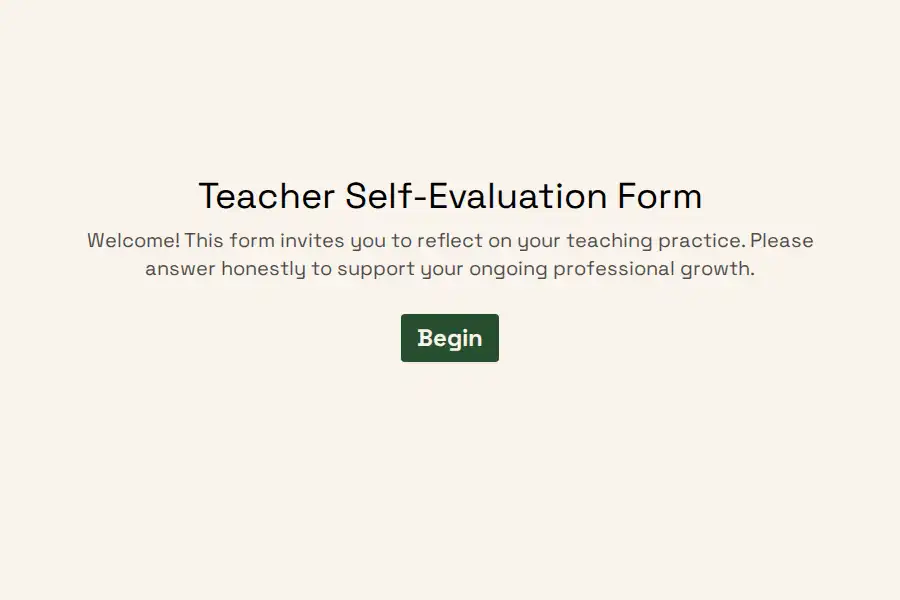
Appraisal conversations go better when the teacher arrives carrying their own analysis instead of waiting to receive one. This teacher self evaluation form template gives educators a structured space to take stock — what worked this term, where they struggled, which skills they want next — so the meeting that follows becomes a planning session rather than a verdict. Among the education templates, it’s the one written for the person at the front of the room rather than the observer at the back.
Why Self-Reflection Changes the Appraisal Dynamic
Top-down evaluations generate compliance; self-evaluations generate ownership. When teachers name their growth areas first, the development plan reflects priorities they chose — the difference between a plan that gets acted on and a document that gets filed.
The structure also levels the conversation. A teacher who has already written that late-day pacing needs work walks in ready to solve it rather than defend against it.
What the Reflection Covers
- Teaching context: grade levels, subjects, and years of experience via short-text and dropdown fields.
- Classroom management self-rating on a rating scale, with space to describe the routines behind the number.
- Adapting for diverse learners: confidence in adjusting lessons across needs and levels.
- What worked: open reflection on the strategies that landed this term.
- Current obstacles: honest documentation of the staffing, resource, and student-need pressures that shaped the term.
- Feedback habits: how often student input actually changes daily practice.
- Growth goals and support requests: the skills the teacher wants, plus the specific help — mentoring, materials, training time — needed to get there.
That final support-request field is the quiet workhorse of the form. Aggregated across a staff, it becomes a map of what next term’s professional development budget should fund — a signal HR teams otherwise pay consultants to approximate, and one that doubles as an employee engagement indicator.
Running It Well
Set aside twenty protected minutes during a staff meeting rather than assigning it as weekend homework — reflection written under Sunday-evening pressure reads exactly like it. Pair the form with the calendar: a start-of-year version captures goals, a mid-year version captures adjustment, an end-of-year version captures the arc. Duplicate it each cycle and the year’s growth story emerges in the teacher’s own words.
Confidentiality Settings
Self-reflection stays honest only while it stays safe. Restrict results to the teacher and their designated reviewer using role-based workspace permissions, and state that boundary in the form’s introduction. A growth tool framed as surveillance stops functioning as one by the second question.
Frequently Asked Questions
How does a self-evaluation differ from a standard teacher evaluation?
A standard evaluation measures performance from outside — observations, student feedback, administrator ratings. A self-evaluation captures the teacher’s own account: intentions, obstacles, goals. Strong appraisal processes run both, because each fills blind spots the other cannot see.
How often should teachers complete a self-evaluation?
Three touchpoints per year works well: one to set goals, one mid-year to adjust, one to close the cycle. More frequent pulses turn reflection into paperwork; rarer ones lose the thread between terms.
Can the form align with our state's teaching standards?
Yes — rename the rating items to mirror your framework’s rubric language so the self-assessment and formal evaluation share a vocabulary. Teachers who self-assess against the exact standards they will be observed against prepare far more effectively.
Is this useful for mentoring new teachers?
Exceptionally. New teachers complete it before each mentoring session, and the documented obstacles hand the mentor a concrete agenda instead of a vague catch-up. Many induction programs run the form monthly throughout a teacher’s first year.