
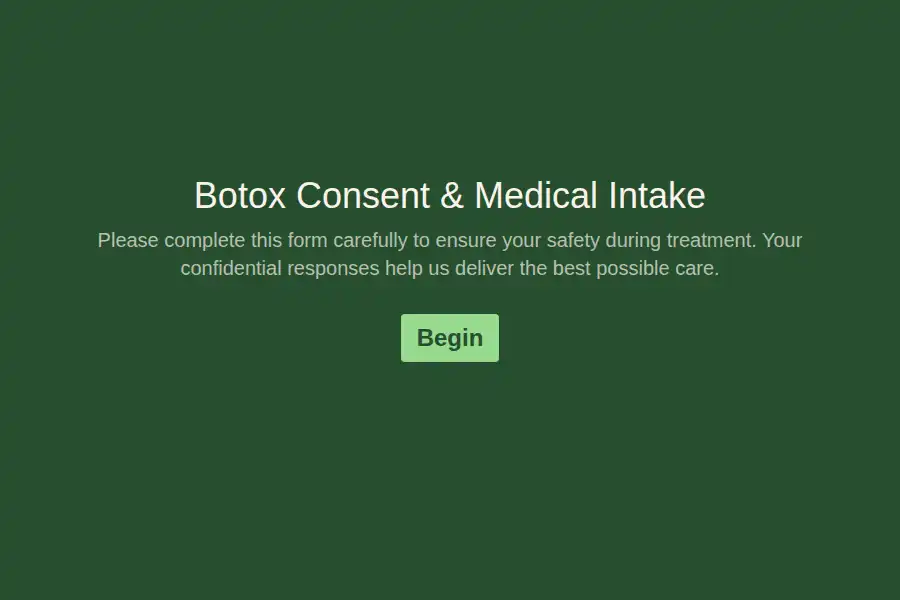

Botox Consent Form Template
The injection takes ten minutes. The documentation is measured in years. In cosmetic medicine, the difference between a routine record and a defensible one is the quality of the consent captured before treatment — and defensible means far more than a signature grabbed in a waiting room. This consent form template walks patients through genuine informed agreement: what the treatment is, what can go wrong, what isn’t promised, and what they’re attesting about their own health.
What “Informed” Actually Requires
Consent isn’t valid because a box was ticked. It’s valid because four elements were genuinely communicated and understood:
- The treatment, described plainly — what botulinum toxin does, where it’s injected, and what it can and cannot change
- The risks, named honestly — bruising, swelling, headache, and the temporary droop or asymmetry every patient should hear about before, not after
- The expectations, stated without promise — results vary between individuals, effects are temporary, and no specific outcome is guaranteed
- The alternatives and the exit — patients know they may decline or stop at any point, and that saying yes today doesn’t bind them forever
The form sequences each element in order, so the patient reads before they agree — never the reverse.
The Anatomy of a Defensible Document
Every section exists because a dispute, an insurer, or a regulator once asked for it:
- Patient identity — legal name, date of birth, and contact details captured unambiguously
- Health attestations — yes/no declarations covering pregnancy and nursing status, neurological conditions, bleeding disorders, and current medications, each followed by space to elaborate. These attestations record that the patient disclosed truthfully — the clinical eligibility judgment happens with the practitioner
- Acknowledgment blocks — separate confirmations that risks were read, questions were invited, and the details provided are accurate, built with legal question fields
- The signature and date — the patient’s recorded agreement, timestamped automatically
Bundled checkboxes are where consent documents fail review. Keep each acknowledgment distinct; granularity is what makes a record credible.
The Signing Sequence That Holds Up
How consent is gathered matters as much as what it says:
- Send it ahead of the appointment so patients read risk disclosures at their own kitchen table — unhurried, unpressured, able to note questions
- Review it together in person before treatment: confirm the attestations, answer what arose, and record that the discussion happened
- Give the patient a copy automatically — a personalized confirmation email they retain, which reinforces that the agreement was transparent rather than extracted
A consent signed at home and verified in person is a far stronger record than one rushed between patients.
Storage, Access, and Retention
Consent records are among the most sensitive documents a practice holds:
- Restrict visibility to treating practitioners using role-based permissions — front-desk staff don’t need access to health attestations
- Retain records per your jurisdiction’s requirements, and be able to retrieve and export any patient’s document quickly when requested
- Never repurpose health disclosures for marketing; the consent that grants treatment is not the consent that grants promotion
Returning Patients
Consent is not a lifetime signature. Re-consent annually, whenever treatment areas or products change, and after any incident or complaint — a short refreshed document takes a returning patient two minutes and keeps your records current.
Frequently Asked Questions
Can the form be signed before the consultation?
It can be completed before — the reading, the attestations, the questions. The final agreement is verified face to face after clinical assessment, since a practitioner may identify something that changes the plan. Reading early and agreeing late is the strongest sequence.
What happens if a patient withdraws consent after signing?
They may — at any point, up to and including mid-treatment. The document records their informed agreement; it never overrides their right to stop. Note the withdrawal in the record with the same care as the signature.
Are electronic signatures legally valid for cosmetic consent?
In most jurisdictions, yes — when captured through an authenticated platform with a timestamp and attributable to the patient. The validity comes from the process around it: verified identity, unhurried reading, and in-person confirmation.
Is one signed form enough for repeat visits?
No. Consent should be refreshed at least annually, whenever the treatment plan changes materially, and after any adverse event. Most practices pair a short annual re-consent with a brief verbal confirmation at each visit, noted in the record.
Should photo permission be part of the consent form?
Never bundled. Treatment consent and marketing permissions are separate agreements with separate consequences — give clinical photography its own explicit, optional acknowledgment so declining it never affects care.