
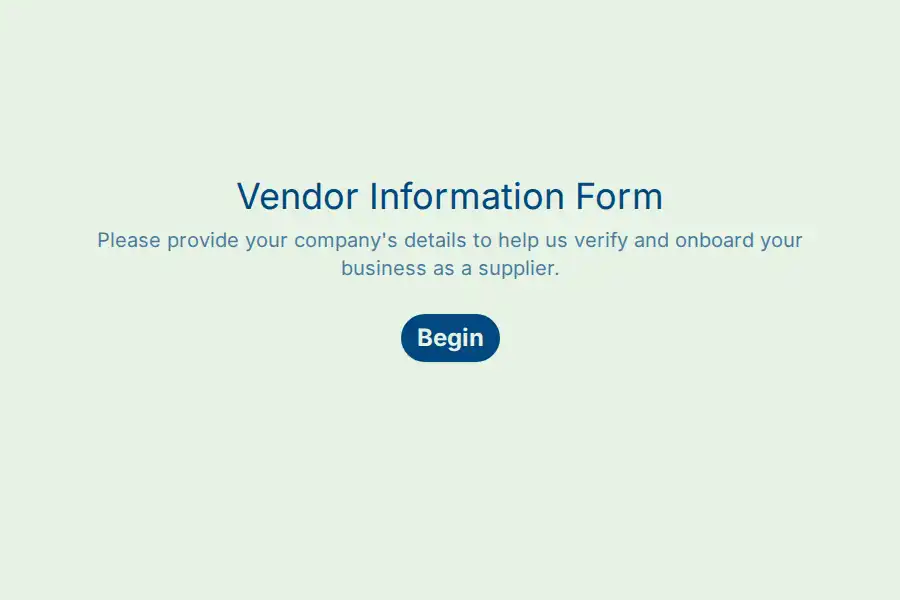
Vendor Information Form Template
The first invoice from a new supplier is where payment cycles stall. AP opens it and finds a missing tax ID, a remit-to address that matches nothing on file, and payment terms nobody agreed to. Weeks of email follow. This vendor information form template exists to make that first invoice boring — every detail AP needs, collected and verified before the vendor is cleared to transact.
The Record AP Needs Before Paying Anyone
Payment-ready vendor records share a fixed anatomy, and the form captures each element at the source:
- Legal identity: exact legal name as it appears on tax documents, any DBA, and business address — the fields that must match the W-9 or local equivalent.
- Tax identifiers: EIN, VAT number, or regional registration numbers, entered in short-text fields so they arrive clean and system-ready.
- Contact routing: the finance contact at the vendor — not the salesperson — for remittance questions and payment confirmations.
- Proof of standing: insurance certificates or licenses your policy requires before work begins, attached as files.
Payment Terms and Remit-To Details
Most payment disputes trace back to terms nobody actually set. The form settles them upfront with a dropdown of your approved terms — Net 15, Net 30, Net 60, due on receipt — alongside preferred payment method and the precise remit-to address. International suppliers additionally state their currency and banking country, so AP can route payment through the right rails instead of guessing from the invoice footer.
Clearance Before the First Purchase Order
Make form completion a gate in the procurement workflow: no PO issues until the vendor’s record is complete and verified. This is the difference between compliance-by-default and compliance-by-archaeology. When a submission arrives, notify the AP queue directly so verification starts the same day, and use webhooks to push approved records into your accounting system without rekeying.
Keeping the Record Alive
Vendor data decays quietly: banks merge, addresses change, insurers rotate. A light annual touch — a verification request asking the vendor to confirm or correct their details — keeps records payment-ready without a full re-onboarding. Teams maintaining larger vendor files usually pair this form with the evaluation collection for performance reviews of the suppliers already in it.
Frequently Asked Questions
When should a vendor complete this form — at registration or before the first PO?
Before the first PO, always. Registration can happen earlier and informally; payment-clearance information must be verified before any commitment creates an obligation to pay.
Why does the tax ID matter so much if we have the vendor's invoice?
Invoices are self-asserted; tax IDs are what reporting and withholding obligations hang on. A mismatched or missing tax ID surfaces at year-end reporting, when fixing it means chasing a supplier for documents about payments made months earlier.
Who should own the completed vendor records?
Accounts payable should own the payment-clearance record, even when procurement owns the relationship. Separating relationship management from payment verification is a basic internal control — the people who want to buy quickly should not be the sole checkers of what gets paid.
Can we collect international banking details this way?
Collect the routing basics — currency, country, bank name — but treat full account numbers with caution. Many organizations complete sensitive banking details through a dedicated secure step or verified portal after initial clearance, keeping the form to identifiers and documents.