
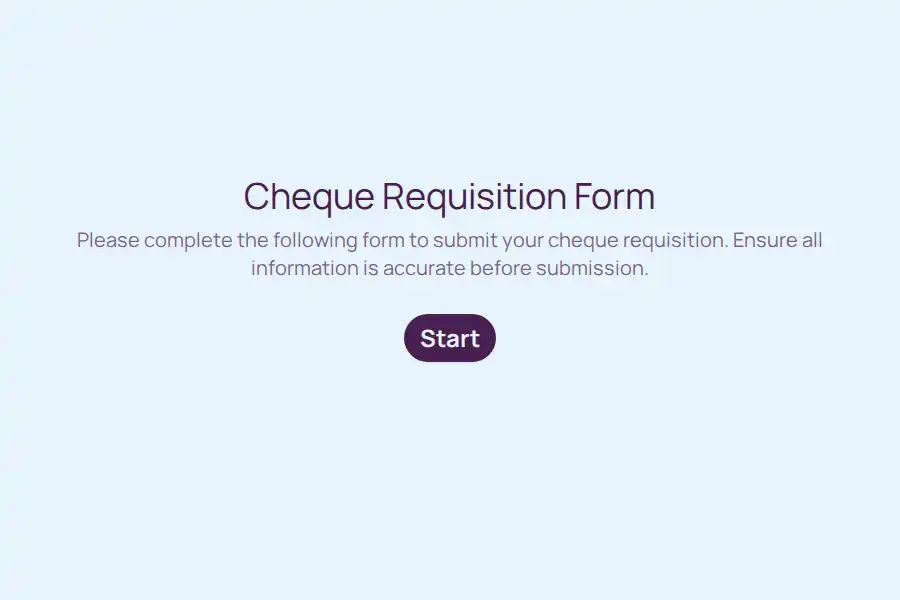
Cheque Requisition Form Template
Checks persist in business because someone always insists on them — the landlord, the licensing board, the trade association that hasn’t heard of bank transfers. Because check requests are irregular, they arrive chaotic: sticky notes, half-filled email templates, payee names that don’t match bank records. This cheque requisition form template imposes one clean intake for every check payment — what’s being paid, to whom exactly, coded where, approved by whom — so the weekly check run starts organized instead of detective.
What Every Check Request Needs
The form answers the three questions every check run requires, in the order accounting asks them:
- Who gets paid: the payee’s exact legal name as their bank knows it — not the storefront name, not the abbreviation. Payee-name mismatches are the leading cause of checks returned and reissued.
- How much and why: the precise amount with a stated business purpose, so the check register reads as a record rather than a list of unexplained outflows.
- When it’s needed: the required-by date, which lets finance slot the request into the right run instead of treating every request as urgent.
Coding and Approval Before the Run
A check without cost coding is an accounting error in transit. The form requires the cost center or budget line at submission — the requester knows where the spend belongs better than AP ever will — alongside supporting documents attached for verification: the invoice, registration form, or contract that justifies the payment. Manager approval is captured on the form itself, so nothing reaches the run without an auditable sign-off, and the submission doubles as the pre-approval record auditors ask for later.
Verifying New Payees
Payment fraud’s favorite entry point is a first-time check payee with changed details. The form flags new payees explicitly, and process handles the rest: verify payee identity through a known contact via a second channel before the first check issues, and treat any later change to payee details — especially bank changes — as suspicious until independently confirmed. The minor friction of a callback is the cheapest fraud control finance will ever deploy.
Fitting the Check Run Calendar
Publish the run schedule — for example, checks cut Wednesdays for requests submitted by Tuesday noon — and state it in the form’s instructions. Requests arriving after cutoff wait for the next run unless the urgency field and an approver justify exception. Teams formalizing the surrounding payment workflows will find companion intake formats in the payment collection.
Frequently Asked Questions
When should we cut a check instead of paying by transfer or card?
When the payee requires it, or when no banking relationship exists for electronic payment. Otherwise, transfers beat checks on cost, speed, and traceability — the check run should shrink each year, not grow.
Who can authorize a check request, and at what amounts?
Follow your delegation-of-authority table: line managers for small amounts, department heads above a threshold, finance sign-off above the next band. Build the thresholds into the form’s approval field so routing happens by rule rather than by memory.
What supporting documents should accompany a check request?
Whatever created the obligation: the invoice, registration confirmation, signed agreement, or application form. A check request without a source document isn’t ready to pay — it’s ready to be questioned.
Why does the form end with a confirmation attestation?
The attestation makes the requester personally verify payee, amount, and coding before submission — the last checkpoint before a physical instrument leaves the building. Errors caught at attestation cost a minute; errors caught after the check clears cost a reconciliation.