
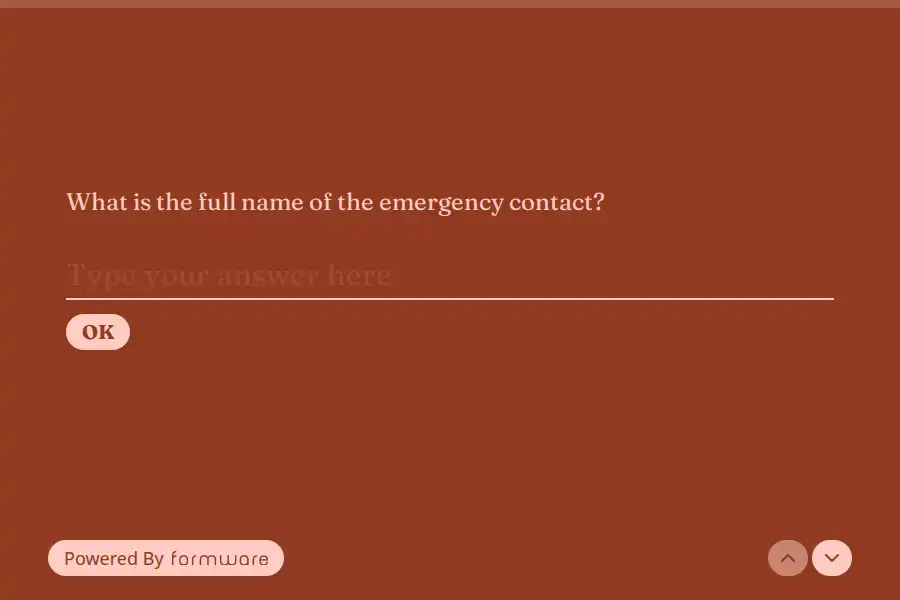
Emergency Contact Form Template
Emergency contact data is judged in one moment: the sixty seconds after something goes wrong, when someone needs to reach a person’s family and the record in front of them either works or doesn’t. A single name with one number, collected two years ago, fails that moment regularly. This emergency contact form template is engineered for the moment instead of the filing cabinet — dual contacts, multiple phone paths, location context, and the notes a responder actually needs while under pressure.
Designed for Retrieval, Not Just Collection
Most contact forms optimize for collection and ignore retrieval. This one reverses the priority, because a record nobody can find or use mid-incident doesn’t exist:
- Two contacts, not one: primary and secondary, each with a name and relationship — because the primary is sometimes the person standing next to you when it happens.
- Multiple phone paths: mobile plus an alternate per contact. People don’t answer unfamiliar numbers; the second path is the difference between reaching someone and leaving a voicemail during an emergency.
- Location context: where the contact lives relative to the subject — a contact in another country changes who you call first, and that’s a decision better made before it’s urgent.
- Responder notes: a short field for operational context the subject or organizer provides — language spoken, guardianship arrangements, anything that prevents a wrong turn in the critical minute.
Who Uses It
The form is deliberately universal, because duty of care doesn’t only live in HR: event organizers collecting contacts per attendee or volunteer, field operations maintaining records for contractors and temporary crews who never pass through onboarding, youth programs capturing guardian details with the consent fields their liability requires, sports clubs and community groups holding records for members at away fixtures. The structure holds across all of them — the subject changes, the responder’s needs don’t.
Keeping Records Reachable When It Counts
Collection is half the job; availability is the other half. Records should be searchable by subject name within seconds, from a phone — because incidents happen away from desks. For events and field operations, export the day’s records to a locally available copy on the safety lead’s device, so connectivity failure doesn’t become retrieval failure. And schedule an annual or per-season reconfirmation: contact data decays on a schedule whether you verify it or not. Event teams assembling the surrounding safety and registration paperwork will find companion formats in the plan-events collection.
Frequently Asked Questions
Is this only for employers?
No — that’s the point of its design. Any organization holding people under duty of care needs these records: events, volunteers, contractors, programs with minors, field teams. The subject’s employment status is irrelevant to the responder’s needs.
Can we ask for medical information here?
Keep it minimal and clearly optional — the responder-critical facts (severe allergy, relevant condition) belong, and a diagnostic history doesn’t. Voluntary disclosure, restricted access, and stated purpose are the three conditions that keep this lawful and trusted.
How often should records be reconfirmed?
Annually at minimum, and per-engagement for transient populations — volunteers, event attendees, seasonal crews. A contact record’s reliability decays from the day it’s collected; reconfirmation is how you know which records still work.
Who should hold access to these records?
The people who’d respond: safety leads, event managers, duty officers. Small circle, named people, stated in the form’s introduction — employees and volunteers share details far more readily when they know exactly who can reach them.